
WSLP 2026
2nd Workshop on Sign Language Processing (WSLP-2026)
Co-located with EMNLP 2026 in Budapest, Hungary on October 24 –29, 2026Across the world, more than 430 million people experience disabling hearing loss. For many in the Deaf and Hard of Hearing (DHH) community, sign languages are the primary means of communication. These languages are not simply visual equivalents of spoken languages—they are fully developed linguistic systems with their own grammar, structure, and cultural significance. However, accessibility barriers remain widespread due to a shortage of qualified sign language interpreters and limited technological support.
Sign language translation, which involves converting rich visual-gestural input into spoken or written language, presents unique challenges. Unlike spoken languages, sign languages are inherently multi-modal, involving hand gestures, facial expressions, and body posture. These features make the translation task complex, especially in the absence of large annotated datasets and standardized benchmarks.
The Workshop on Sign Language Processing ( WSLP ) aims to address this disparity. The goal of this workshop is to explore innovative approaches and methodologies for translating sign languages, with a particular focus on low-resource settings. We invite researchers and practitioners working on diverse sign languages to come together, share their work, discuss challenges, and foster collaborations that can drive progress in this critical field.
📣 News
- June 8th 2026: Information about the WSLP 2026 Shared Task is now available! Join our Discord server to stay updated and share your ideas with other participants.
- June 8th 2026: Important dates for submissions are released!
- October 2nd 2026: The list of accepted papers for WSLP 2026 is now available!
Accepted Papers
Workshop Main Papers
1. ISLiM: A Compact End-to-End Sign Language Translation Framework
Authors: Shoaib Ahmed, Dipti Mishra Presentation Mode: TBA
2. What Actually Transfers? Diagnosing Output-Projection Initialization in Low-Resource Sign Language Translation
Authors: Kai-Yang Peng, Chunki Lim, Shu-Kai Hsieh Presentation Mode: TBA
3. LSC-CARE: An Annotated Dataset for Medical Catalan Sign Language
Authors: Carlos Escolano, Joan Gomà Cortés, Gemma Barberà, Gerard Sant, Maite Melero Presentation Mode: TBA
4. Isolated Sign Language Recognition for Icelandic Sign Language: Experiments in a Low-Resource Setting
Authors: Finnur Ágúst Ingimundarson, Guðný Björk Þorvaldsdóttir, Mathias Müller, Sarah Ebling Presentation Mode: TBA
5. Using Sign Phonology to Improve Few-Shot Cross-Lingual Transfer Learning for Sign Language Recognition
Authors: Matteo Lanza Presentation Mode: TBA
6. Recognizing Uruguayan Sign Language Glosses in Continuous Discourse: A Curated Dataset and First Baselines
Authors: Manu Bervejillo, Facundo Techera, Emilio Valle-Lisboa, Ariel E. Stassi, Luis Chiruzzo Presentation Mode: TBA
7. Coverage Is Not Enough: A Controlled Study of Annotation Selection for Low-Resource Sign Language
Authors: Gyanendra Shrestha, Liting Zhang Presentation Mode: TBA
8. Bukva: Russian Sign Language Alphabet
Authors: Petr Surovtsev, Alexander Nagaev, Karina Kvanchiani, Elizaveta Petrova, Alexander Kapitanov Presentation Mode: TBA
9. Cross-Lingual Transfer of Self-Supervised Representations for Sign Language Translation: A Case Study for Turkish Sign Language
Authors: Özge Can Özel, Saliha Nur Şahin, Murat Saraçlar Presentation Mode: TBA
10. SpaMo-BdSL: Gloss-Free Bangla Sign Language Translation Using Spatial Configurations and Motion Dynamics with LLMs
Authors: Kowshik Saha, Adibah Mahmud, M Saifur Rahman Presentation Mode: TBA
11. Zero-Shot Cross-Lingual Recognition of Sign Language Handshapes
Authors: Marcel Granero-Moya, Carolina del Corral Farrarós, Gloria Haro, Coloma Ballester, Ricardo Marques Presentation Mode: TBA
12. HandReader: Advanced Techniques for Efficient Fingerspelling Recognition
Authors: Pavel Korotaev, Petr Surovtsev, Alexander Kapitanov, Karina Kvanchiani, Alexander Nagaev Presentation Mode: TBA
13. Znaki: A Russian Fingerspelling Recognition Dataset
Authors: Petr Surovtsev, Pavel Korotaev, Alexander Nagaev, Alexander Kapitanov Presentation Mode: TBA
14. TransAlign-SLT: Complementary Temporal and Semantic Supervision for Gloss-Free Sign Language Translation
Authors: Pallapu Mohan Krishna, Uppala Sanjay Kumar, M. K. Bhuyan, Debanga Raj Neog Presentation Mode: TBA
15. Articulator-Level Cross-Lingual Transfer in Sign Language Translation
Authors: Ali Elaswad, Omar Mokhtar Gaber Saqr Presentation Mode: TBA
16. Testing Video MLLM Sensitivity to Hand-Localized Visual Detail in Chinese Sign Recognition: A Matched Visual Intervention Study
Authors: Bowen Ye, Dengfeng Yao, Siyuan Jing, Peng Jin, Hongzhe Liu, Cheng Xu Presentation Mode: TBA
Shared Task Papers
1. Whitening and Fine-Tuning Are Substitutes: One-Shot Indian Sign Language Recognition
Authors: Galiveeti Poornima, Sandeep Mathias Presentation Mode: TBA
2. Metric-Learning Retrieval for Cross-Signer Isolated Sign Language Recognition
Authors: Md. Asif Ali, Md. Mosharaf Hossain Apurbo, Kazi Reyazul Hasan Presentation Mode: TBA
3. Multiple-Instance Contrastive Alignment for Pose-Based Sign Spotting
Authors: Md. Mosharaf Hossain Apurbo, Md. Asif Ali, Kazi Reyazul Hasan Presentation Mode: TBA
4. Shared-Encoder Contrastive Grounding for Pose-Based Indian Sign Language Translation
Authors: Gyanendra Shrestha, Liting Zhang Presentation Mode: TBA
5. CARE: A Coverage-Aware Retrieval Ensemble for Isolated Sign Language Recognition
Authors: Tu Nam Nguyen, Hiroki Takahashi Presentation Mode: TBA
6. SignaFusion@WSLP 2026: Gated Vision—Language Adjudication and Multi-Expert Fusion for Isolated Sign Language Recognition
Authors: Bolisetty Samanvitha, Ojas Srivastava, Pruthwik Mishra, Praveen Kumar Chandaliya Presentation Mode: TBA
🗓️ Important Dates
📝 Workshop Papers
- First Call for Papers: June 8th, 2026
- Second Call for Papers: June 15th, 2026
- Third Call for Papers: July 15th, 2026
- Paper Submission Deadline:
August 20th, 2026August 24th, 2026 - Notification of Acceptance:
September 4th, 2026September 10th, 2026 - Camera-Ready Papers Due:
September 10th, 2026September 15th, 2026 - Processing Due: September 25th, 2026
- 📅 Workshop Date: October 29th, 2026
🧪 Shared Task Key Dates
- Start Date: June 8th, 2026
- Training Phase: June 8th – July 31st, 2026
- Testing Phase: August 1st – August 10th, 2026
- Paper Submission Deadline:
August 20th, 2026August 24th, 2026 - Notification of Acceptance:
September 4th, 2026September 10th, 2026 - Camera-Ready Papers Due:
September 10th, 2026September 15th, 2026 - Proceedings Due: September 25th, 2026
All deadlines are 11:59 PM UTC-12:00 (“Anywhere on Earth”).
Note: The workshop will be held in a hybrid format, allowing both in-person and virtual participation. Accepted papers will be presented as posters or oral presentations, as determined by the program committee.
Program
Program under construction, stay tuned!
FAQ
Can't find your answer? Send an email and we will get back to you.
-
Yes, dual submissions are allowed if the other venue also allows dual submissions. If your submission is accepted to the archival track of WSLP, you will have to withdraw your submission to the other venue. Dual submissions to WSLP and EMNLP (including ARR) are not allowed.
Invited Speakers
We will announce invited speakers shortly, stay tuned!
Organizers
You can reach the organizers by e-mail to isign.benchmark@gmail.com.

Ashutosh Modi
Indian Institute of Technology Kanpur (IIT Kanpur), India

Mohammed Hasanuzzaman
ADAPT Centre, MTU, Ireland

Marek Hrúz
University of West Bohemia in Pilsen, Czech Republic

Facundo Manuel Quiroga
Universidad Nacional de La Plata (UNLP), Argentina

Sabyasachi Kamila
Manipal Institute of Technology Bengaluru, Manipal Academy of Higher Education, Manipal, India

Abhinav Joshi
Ph.D. Student, Indian Institute of Technology Kanpur (IIT Kanpur), India

Sanjeet Singh
Ph.D. Student, Indian Institute of Technology Kanpur (IIT Kanpur), India

Keren Artiaga
ADAPT Centre, MTU, Cork, Ireland
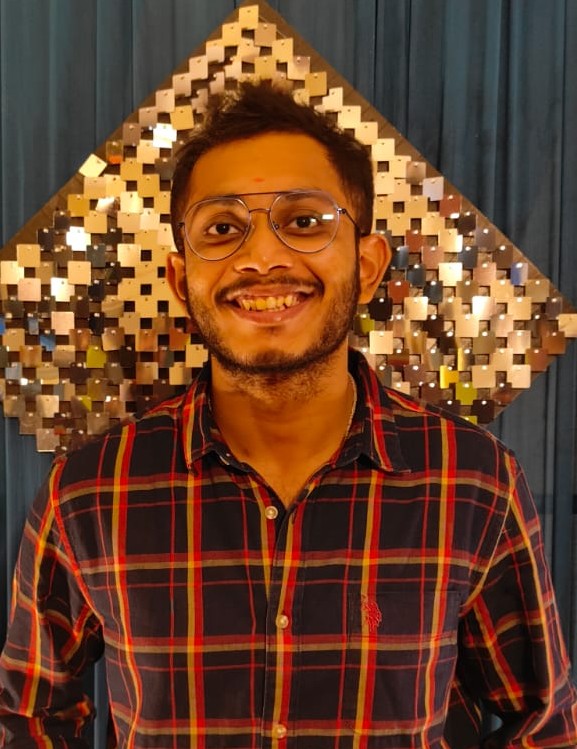
Pokala Dattatreya
Masters Student, Indian Institute of Technology Kanpur (IIT Kanpur), India
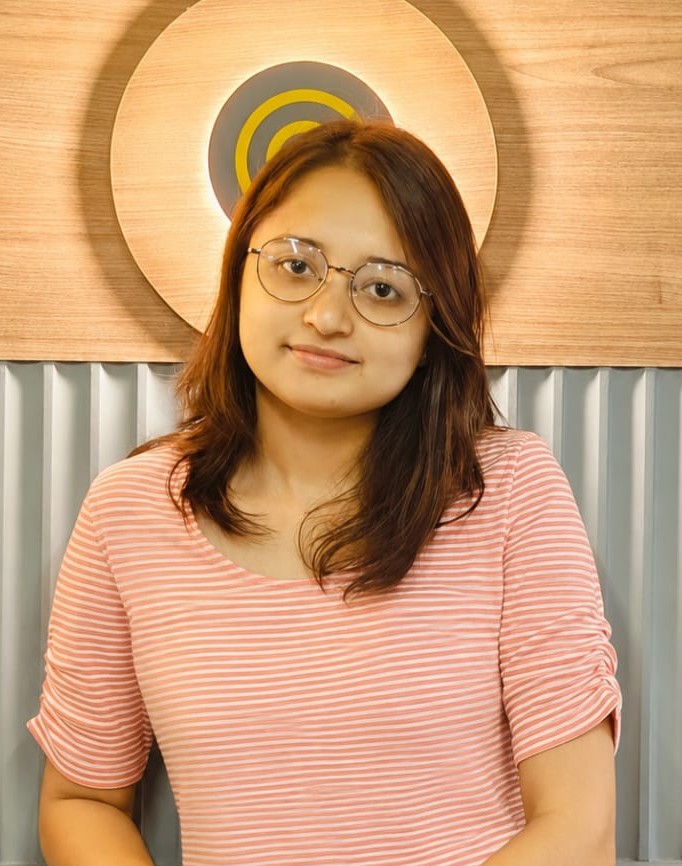
Khushi Jaydeep Pujara
Masters Student, Indian Institute of Technology Kanpur (IIT Kanpur), India

Ivan Gruber
Senior Researcher, University of West Bohemia in Pilsen, Czech Republic
Tomáš Železný
University of West Bohemia in Pilsen, Czech Republic
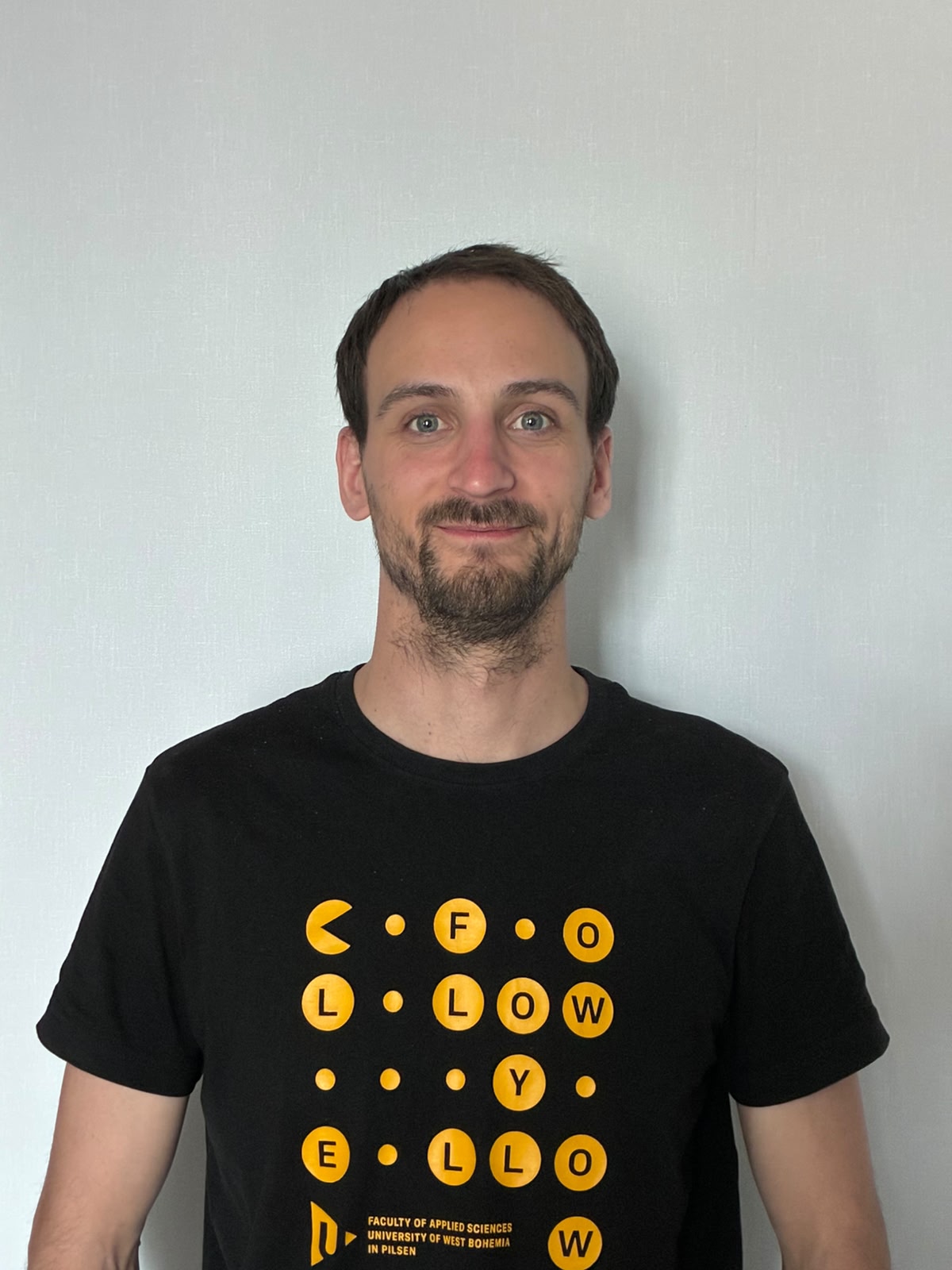
Jakub Honzík
University of West Bohemia in Pilsen, Czech Republic